
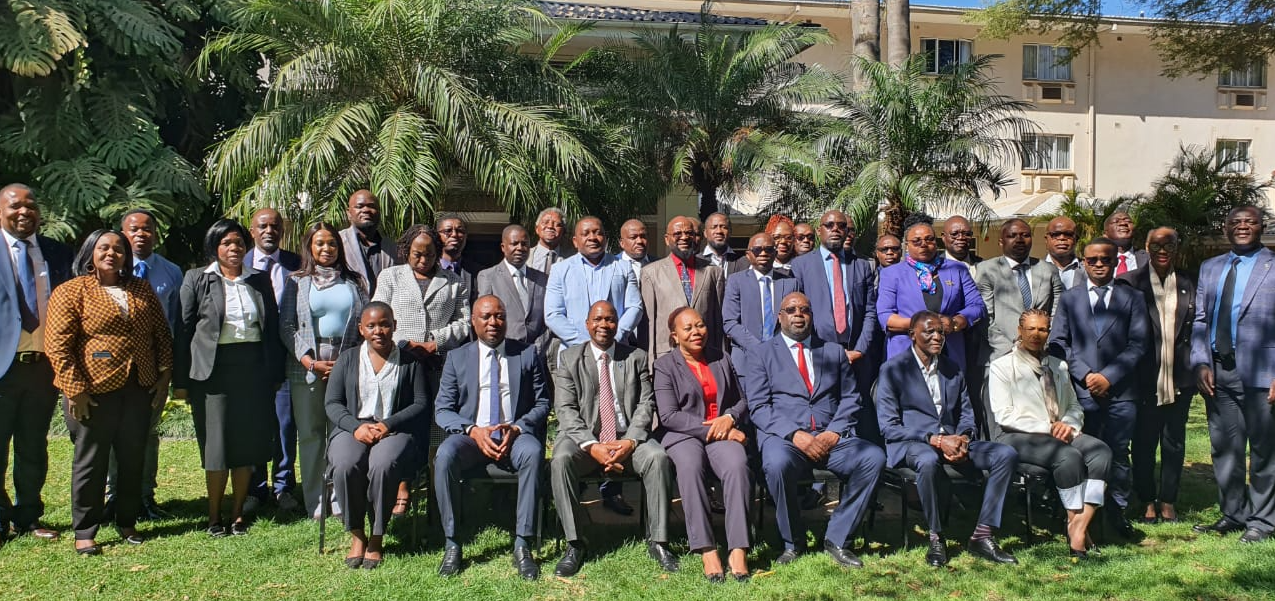
LUSAKA, Zambia — August 8, 2026 — The Southern African Development Community (SADC) is moving toward a Simplified Trade Regime (STR) aimed at making it easier and less costly for small-scale traders to conduct business across borders in Southern Africa.
SADC member states reaffirmed their support for implementing the proposed regime following a high-level policy dialogue held in Lusaka, Zambia, on August 4–5, 2026.
The initiative could have significant implications for thousands of informal and small-scale traders who regularly cross national borders to buy and sell agricultural products, household goods and other merchandise.
Making Regional Trade Easier
Under conventional customs systems, small traders can face many of the same documentation requirements and border procedures as much larger businesses.
For someone transporting a relatively small quantity of goods to sell in a neighboring country, complicated customs forms, rules-of-origin requirements and other administrative procedures can make formal trade difficult.
The proposed SADC Simplified Trade Regime seeks to address some of those obstacles.
The framework is designed to simplify customs procedures, reduce non-tariff barriers and ease certificate-of-origin requirements for eligible goods traded by qualifying small-scale cross-border traders.
Instead of navigating procedures primarily designed for larger commercial shipments, eligible traders could have access to a simpler system tailored to the realities of small-scale regional commerce.
Five Countries at the Center of Pilot Work
SADC said pilot work is focusing on Malawi, Mozambique, Tanzania, Zambia and Zimbabwe.
These countries are connected by important regional trading corridors where communities on both sides of national borders depend heavily on cross-border commerce.
The pilot approach provides governments with an opportunity to determine how simplified procedures work in practice before potentially expanding the system more widely across the SADC region.
Among the issues policymakers will have to address are which products qualify for simplified treatment, the value limits for eligible shipments, documentation requirements and how customs officials will administer the system at border crossings.
Why This Matters to Ordinary Africans
For large corporations, customs paperwork can be handled by dedicated logistics departments, customs brokers and legal professionals.
For a small trader carrying vegetables, clothing, household products or other goods across a border, those resources may not exist.
The cost and complexity of complying with formal procedures can therefore represent a much larger burden relative to the value of the trader’s business.
Simplification could encourage more traders to use formal border channels while reducing the time and administrative costs associated with moving goods between neighboring countries.
This is particularly important because informal cross-border trade contributes to household incomes, local markets and food security throughout Southern Africa.
Women make up a significant part of the small-scale cross-border trading community, while young entrepreneurs also rely on regional commerce as a source of income.
Potential to Reduce Harassment and Corruption
Simpler and clearer border procedures could also have benefits beyond reducing paperwork.
Complicated systems can create uncertainty about what traders are required to pay, which documents they need and whether their goods qualify for preferential treatment.
Greater transparency could reduce opportunities for unofficial payments, arbitrary treatment and harassment at border crossings.
However, the effectiveness of the regime will ultimately depend on implementation.
Customs and immigration officials will need appropriate training, traders will need clear information about their rights and responsibilities, and participating countries will have to coordinate procedures so that simplification on one side of a border is recognized on the other.
Connecting Small Traders to the SADC Free Trade Area
The initiative also reflects a larger question facing regional integration efforts in Africa: How can free-trade agreements benefit ordinary citizens and not only large companies?
The SADC Free Trade Area was established to increase trade among participating member states by reducing barriers to regional commerce.
Yet removing tariffs alone does not necessarily guarantee that a small trader can easily move goods across a border.
Documentation requirements, lengthy inspections, inconsistent regulations and other non-tariff barriers can continue to restrict commerce even when tariffs have been reduced.
A functioning Simplified Trade Regime could help close that gap by giving smaller traders a more practical pathway into formal regional trade.
For a woman selling agricultural products between Zambia and Zimbabwe, for example, regional economic integration becomes meaningful when it translates into less time at the border, clearer rules, lower costs and more money remaining in her business and household.
A Test for People-Centered Regional Integration
SADC’s push toward simplified trade comes as African governments increasingly seek to expand regional and continental commerce.
If successfully implemented, the STR could complement broader efforts to increase intra-African trade by ensuring that micro and small businesses are able to participate alongside larger companies.
The next challenge will be turning the commitments made in Lusaka into procedures that traders can actually use at border posts.
For millions of Southern Africans whose livelihoods depend on buying and selling goods across national boundaries, the success of regional integration may ultimately be measured not by agreements signed in conference rooms, but by how quickly, safely and affordably they can cross a border and conduct business.