
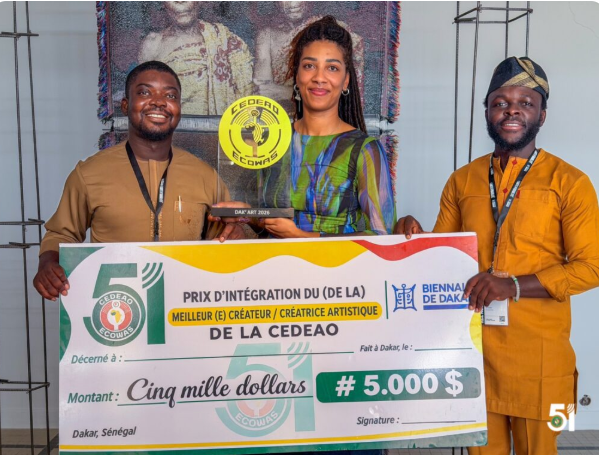
DAKAR, Senegal — The Economic Community of West African States (ECOWAS) has reaffirmed its commitment to supporting the region’s cultural and creative industries through its participation in the 16th Dakar Contemporary African Art Biennale, one of Africa’s leading artistic and cultural events.
The biennale, which opened on November 19 and runs through December 19 in Senegal’s capital, brings together artists, cultural practitioners, policymakers, and creative industry stakeholders from across Africa and beyond. ECOWAS’ participation underscores the regional bloc’s recognition of the arts and creative economy as important drivers of economic growth, cultural exchange, and regional integration.
By engaging in the month-long exhibition, ECOWAS aims to highlight the role of culture and creativity in promoting West Africa’s identity while creating opportunities for artists and creative entrepreneurs to showcase their work on an international stage. The event also provides a platform for dialogue on the challenges and opportunities facing the continent’s cultural sector.
The creative industries, which include visual arts, music, film, fashion, design, and digital content, have increasingly been identified as sectors capable of generating employment, especially for young people, while contributing to economic diversification across West Africa. Regional institutions have been encouraging policies and initiatives that help creators access markets, strengthen professional networks, and preserve Africa’s cultural heritage.
The Dakar Biennale, commonly known as Dak’Art, has grown into one of the most important contemporary art exhibitions on the continent since its establishment. The event attracts artists, collectors, curators, researchers, and visitors from around the world, providing visibility for African artistic expression and fostering cross-cultural collaboration.
ECOWAS officials said the institution’s presence at the exhibition reflects its continued support for the development of cultural and creative industries as part of broader efforts to advance regional cooperation and socio-economic development.
While ECOWAS confirmed its institutional participation and support for the event, no new binding financing agreement or formal funding mechanism for the creative industries was announced in connection with the biennale.
The exhibition remains underway and is expected to continue drawing attention to the growing significance of Africa’s cultural and creative sectors in shaping the continent’s economic and social future.