
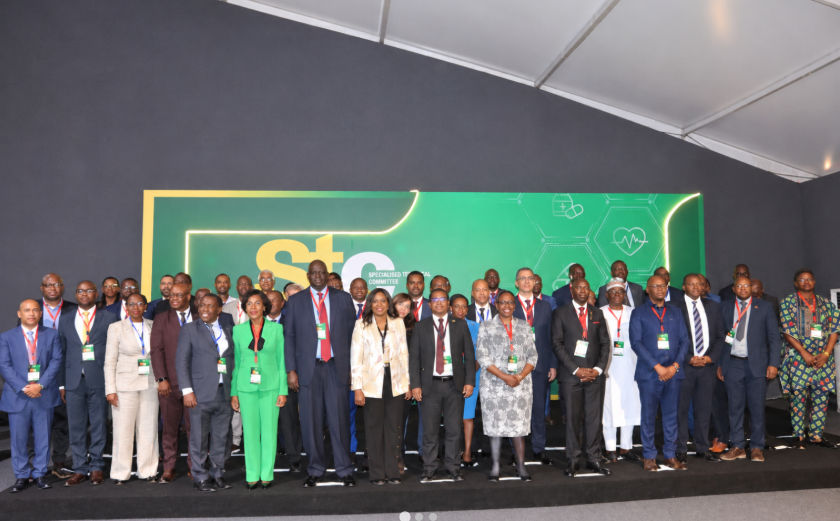
LUANDA, Angola – The ministerial segment of the African Union’s Sixth Specialized Technical Committee (STC) on Health, Nutrition, Population and Drug Control has officially opened in Luanda, bringing together African ministers and policymakers to discuss coordinated strategies for some of the continent’s most pressing social and public health challenges.
During the opening proceedings, ministers were urged to adopt a more integrated approach to policymaking, emphasizing that health, nutrition, population issues and drug control are deeply interconnected and should not be managed through separate institutional frameworks. Officials highlighted the need for stronger coordination across sectors to improve policy outcomes and accelerate progress toward continental development goals.
The meeting serves as a platform for member states to review key policy priorities, exchange experiences and develop recommendations aimed at strengthening health systems, improving nutritional outcomes, addressing population-related challenges and enhancing responses to drug-related issues across Africa.
Participants were presented with a series of policy recommendations intended to guide future collaboration among AU member states. Discussions focused on creating synergies between different sectors, recognizing that challenges such as malnutrition, demographic change, disease burdens and substance abuse often overlap and require comprehensive responses.
The Specialized Technical Committee is one of the African Union’s mechanisms for advancing sector-specific cooperation and providing strategic guidance on policy development. Its ministerial sessions bring together decision-makers to consider recommendations developed by technical experts and to chart priorities for continental action.
The opening of the ministerial segment marks an important stage in the committee’s deliberations. However, while policy recommendations were presented during the proceedings, the AU’s statement does not independently confirm that all of the proposed measures have been formally adopted or implemented by member states.
The meeting in Luanda is expected to contribute to ongoing efforts by the African Union to strengthen coordination among member states in addressing health, nutrition, population and drug control challenges, while promoting more integrated and sustainable policy solutions across the continent.