
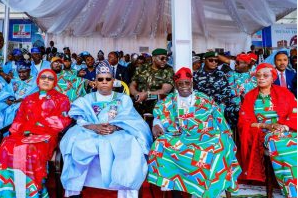
KADUNA, Nigeria — Nigerian President Bola Ahmed Tinubu has inaugurated an 81-kilometre section of the Abuja–Kaduna highway, marking another milestone in the government’s efforts to improve transportation infrastructure and strengthen economic connectivity across the country.
According to the Nigerian State House, the inauguration included a symbolic ribbon-cutting ceremony and the official commissioning of Lot 1 of the Abuja–Kaduna–Zaria–Kano Dual Carriageway.
The highway forms part of a major transportation corridor connecting Nigeria’s Federal Capital Territory with Kaduna, Zaria and Kano, important centres of commerce, manufacturing and agricultural activity.
Infrastructure and Economic Development
The Abuja–Kaduna–Zaria–Kano corridor plays an important role in Nigeria’s domestic transportation network, facilitating the movement of people, agricultural products, manufactured goods and commercial traffic between major economic centres.
Improved road infrastructure has the potential to reduce transportation costs, shorten travel times and increase access to markets. These improvements are particularly significant for businesses and agricultural producers that depend on reliable road networks to distribute goods.
However, the inauguration of the 81-kilometre section does not establish that the entire highway project has been completed or that its anticipated economic benefits have already been realized.
Political Developments
The State House announcement also addressed the beginning of President Tinubu’s 2027 presidential campaign, placing the infrastructure event alongside developments in Nigeria’s electoral landscape.
The highway commissioning and the political announcement represent separate developments, with the road project forming part of the government’s infrastructure programme.
Why It Matters for West African Integration
Nigeria is the largest economy by population in the Economic Community of West African States (ECOWAS), and its domestic transportation infrastructure has implications for regional economic integration.
Efficient road networks within Nigeria can support wider West African trade by connecting production centres, commercial markets and transportation corridors that link to neighbouring countries.
Improved domestic connectivity can also complement the objectives of the African Continental Free Trade Area (AfCFTA), which seeks to expand trade and economic cooperation among African countries.
Nevertheless, regional integration depends on more than road construction. Border procedures, customs coordination, transportation regulations and the removal of non-tariff barriers remain essential to ensuring that infrastructure improvements translate into greater cross-border trade.
WDS Perspective: Connecting National Infrastructure to Continental Integration
For When the Dust Settles (WDS), the Abuja–Kaduna highway development illustrates an important dimension of Africa’s integration process: continental economic cooperation depends heavily on the quality of national infrastructure.
While the African Union and regional economic communities such as ECOWAS promote interconnected African markets, individual member states must develop the transportation systems necessary to support those ambitions.
Nigeria’s highway investment therefore raises a broader question: Can improvements in national transportation networks help accelerate the development of a more connected West African economy?
The inauguration represents a concrete infrastructure milestone. Its longer-term contribution to regional integration will depend on the performance of the completed road section, continued investment in connecting routes and the effectiveness of policies that facilitate trade across national borders.
Source: Nigerian State House announcement.
When the Dust Settles (WDS) — Examining African integration through the African Union and Africa’s eight Regional Economic Communities.