
BANGKOK, THAILAND — The Southern African Development Community (SADC) and the African Export-Import Bank (Afreximbank) are exploring a strategic partnership aimed at strengthening trade financing, infrastructure development, and industrial production across Southern Africa.
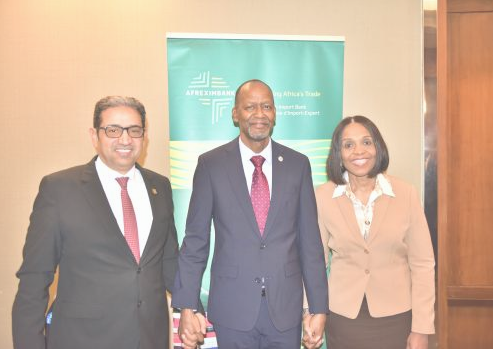
SADC Executive Secretary Elias Magosi met with Kanayo Awani, Afreximbank’s Executive Vice President for Intra-African Trade and Export Development, during the IMF–World Bank Annual Meetings in Bangkok.
The discussions focused on developing a cooperation framework to support regional industrial value chains, improve infrastructure connectivity, and accelerate implementation of the African Continental Free Trade Area (AfCFTA).
Financing Southern Africa’s Industrial Transformation
A central focus of the proposed partnership is mobilizing financing for infrastructure and productive industries.
Potential areas of cooperation include railway connectivity, automotive manufacturing, pharmaceutical production, critical-mineral processing, and agricultural inputs.
These sectors are important to SADC’s ambition to move beyond exporting raw materials toward developing competitive manufacturing industries.
Improved railway networks could reduce transportation costs and connect industrial centers with regional markets, while investments in mineral processing and manufacturing could help African economies retain more value from their natural resources.
Afreximbank’s involvement could provide access to financing expertise and support for developing regional investment projects.
Reducing Trade Barriers Across Southern Africa
The discussions also addressed one-stop border posts and the reduction of non-tariff barriers that continue to restrict regional commerce.
Complicated customs procedures, administrative delays, and inconsistent regulations can increase transportation costs and discourage cross-border trade.
One-stop border posts allow neighboring countries to coordinate border-clearance procedures, potentially reducing delays for businesses transporting goods.
These improvements would complement the AfCFTA’s objective of creating a more integrated African market.
For SADC, efficient border operations are particularly important because regional manufacturing depends on the movement of raw materials, components, and finished products between countries.
Proposed Agreement Still Under Development
The two institutions also discussed developing a memorandum of understanding to formalize their cooperation.
However, the announcement concerns partnership development rather than a completed financing arrangement.
No newly signed financing agreement, approved investment amount, or disbursement has been confirmed through the information provided.
The next important step will be determining whether the proposed partnership produces specific projects, financing commitments, and implementation schedules.
Why This Matters for African Integration
Southern Africa’s industrialization ambitions require substantial investment in transportation infrastructure, manufacturing capacity, and regional supply chains.
A stronger relationship between SADC and Afreximbank could help connect regional development priorities with African financial institutions capable of supporting trade and industrial investment.
The proposed cooperation also reflects a broader African Union objective: strengthening economic integration by building industries that serve regional markets rather than relying primarily on exports of unprocessed commodities.
However, the success of the partnership will ultimately depend on implementation.
The central question is whether SADC and Afreximbank can move beyond discussions to finance functioning rail networks, expand African manufacturing, reduce border delays, and create industrial value chains that generate employment and economic growth across Southern Africa.