
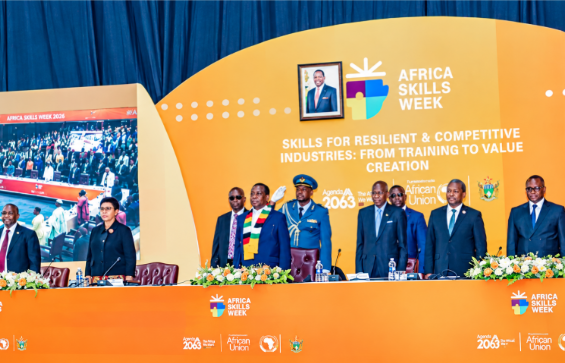
The African Union, in partnership with the Government of Zimbabwe, officially opened the third Africa Skills Week in Harare on October 12, bringing together policymakers, educational institutions, industry representatives and development partners to address Africa’s growing demand for skilled workers.
The five-day event, running through October 16, focuses on developing skills for resilient and competitive African industries, with particular emphasis on transforming education and technical training into economic opportunities.
The gathering highlights the importance of preparing African workers for changing industrial demands, including manufacturing, engineering, technology and entrepreneurship.
Connecting Education to Industrial Development
Africa’s industrialization ambitions depend not only on investment in factories, transportation networks and energy infrastructure but also on developing a workforce capable of supporting modern industries.
Technical and vocational education, engineering training and stronger partnerships between educational institutions and employers are essential to closing skills gaps and improving productivity.
Africa Skills Week provides a platform for examining how governments can better align education systems with labor-market needs while expanding opportunities for young people.
Discussions are also expected to contribute to preparations for the African Union’s November meeting on education, science and technology.
Why Skills Development Matters for African Integration
The initiative supports the African Union’s broader Agenda 2063 objectives of industrial transformation, job creation and sustainable economic growth.
As African countries work to expand regional manufacturing and strengthen value chains under the African Continental Free Trade Area (AfCFTA), access to qualified technicians, engineers and skilled workers will become increasingly important.
Regional Economic Communities can also help coordinate training standards, workforce mobility and industrial skills development across national borders.
The central challenge is ensuring that education and training programmes produce practical skills that translate into employment, entrepreneurship and increased industrial productivity.
The bigger question is whether Africa can develop the skilled workforce necessary to turn its industrialization ambitions into competitive industries, sustainable jobs and greater economic independence.