
ABUJA, Nigeria — September 29, 2026 — Nigeria’s federal government is putting skills development, entrepreneurship, digital technology and the creative economy at the center of its efforts to expand economic opportunities for young Nigerians, with the Presidency announcing a goal of lifting five million young people out of poverty through skills-acquisition and empowerment programmes.
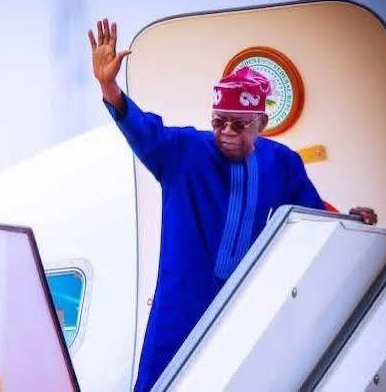
The initiative comes as President Bola Ahmed Tinubu returns to Nigeria following a working vacation in Europe and as his administration continues to emphasize employment, entrepreneurship and private-sector development as components of its economic programme.
Five Million Young Nigerians Targeted
According to Nigeria’s State House, the skills initiative is being implemented under the National Poverty Reduction with Growth Strategy, or NPRGS, and is intended to provide young Nigerians with practical, market-oriented skills that can improve employability and economic independence.
The programme has already moved beyond the Federal Capital Territory to Oyo State, where its current phase runs from September 28 through October 9.
In Oyo, 200 young Nigerians are receiving training across three areas:
- Graphics and artificial intelligence — 30 participants
- Makeup artistry — 85 participants
- Fashion design — 85 participants
The government says the programme will subsequently expand to additional states and geopolitical zones.
That combination of training areas is significant because it brings together different parts of the modern African economy. Fashion and beauty represent established entrepreneurial sectors where relatively small businesses can provide employment, while graphics and artificial intelligence expose participants to rapidly developing digital industries.
Training Is Being Connected to Equipment
A particularly important feature of the programme is that participants are not expected to leave with training alone.
According to the Presidency, participants completing the programme will receive equipment including laptops, sewing machines and fully equipped makeup kits intended to help them establish businesses and generate sustainable livelihoods. The government also says beneficiaries will be connected with organizations and business opportunities.
Officials further announced plans to distribute 500 tablets during the programme’s grand finale as part of a broader digital-empowerment effort.
This addresses one of the practical difficulties facing many skills-development programmes: knowing how to perform a trade does not necessarily mean a graduate possesses the capital or equipment required to begin earning income.
Providing tools alongside training could therefore reduce at least part of the barrier between learning a skill and attempting to turn that skill into a business.
Whether the programme ultimately reaches its five-million-person poverty-reduction target, however, will depend on the scale and implementation of subsequent phases, as well as whether participants are able to convert training and equipment into sustainable income.
AI Enters Nigeria’s Youth Employment Strategy

The inclusion of artificial intelligence is particularly noteworthy.
Rather than restricting vocational programmes to traditional trades, the Oyo programme places emerging digital skills alongside fashion and beauty services.
The Presidency says AI adoption could create opportunities to improve employability and prepare young Nigerians for emerging jobs.
For Nigeria—and Africa more broadly—the issue extends beyond technology itself.
Africa has one of the world’s youngest populations, meaning governments face continuing pressure to expand employment and economic opportunities for millions of people entering working age.
Digital industries could become one part of that employment equation, particularly if African workers and businesses participate not simply as consumers of foreign technologies but as developers, entrepreneurs and service providers.
Nigeria’s Creative Economy Becomes Part of the Employment Conversation
At the same time, the Tinubu administration is increasingly presenting Nigeria’s enormous cultural and creative sector as another potential engine of business formation and employment.
That message was reinforced after Nigerian filmmakers Damilola Osikoya and Nora Awolowo achieved a Guinness World Record for the largest attendance at a film screening with the September 26 screening of Black Market in Lagos.
In congratulating the filmmakers, President Tinubu said Nigeria’s creative economy is building businesses, generating employment and opening international markets for Nigerian talent. He specifically identified film, music, fashion and art as industries capable of taking Nigerian culture to global audiences.
The statement reflects a broader definition of economic development.
Industrialization in Africa is frequently discussed through manufacturing, mining, agriculture, energy and infrastructure. Those sectors remain critical, but Nigeria’s experience demonstrates why intellectual property, entertainment, fashion and digital content can also form part of a country’s export economy.
Nigeria already possesses one of Africa’s most internationally recognizable cultural industries. The development challenge is turning that global cultural influence into more businesses, formal employment, investment and export revenue.
Tinubu Returns to Nigeria
These developments coincide with President Tinubu’s return to Nigeria following a working vacation.
The Presidency announced on September 29 that Tinubu had departed Paris and was expected to arrive in Lagos later in the day. According to the State House, the President left Abuja on August 30, spent a week in London and subsequently travelled to Paris.
The Presidency says Tinubu will first spend time in Lagos, including attending an Independence Day film premiere honoring MKO Abiola, before returning to Abuja. The State House also says he is scheduled to hold political meetings in Lagos connected to preparations for the 2027 elections.
His European stay also included meetings with business figures and came as Tinubu witnessed the signing of an agreement between Ogun State and DP World concerning a proposed deep-sea port and Blue Marine Economic Zone.
A Broader Question for Nigeria’s Economic Transformation
Taken together, the latest developments illustrate several different components of Nigeria’s economic-development agenda: skills development, artificial intelligence, entrepreneurship, infrastructure and the creative economy.
The five-million-person target is ambitious.
The more important question will be how effectively the programme can be expanded nationally and whether beneficiaries ultimately create sustainable businesses or secure employment after completing their training.
Providing equipment is one step toward addressing that challenge. Connecting participants to markets, financing, mentorship, customers and broader economic opportunities will also be important.
The creative economy raises a similar question.
Nigeria has already demonstrated its cultural reach through Nollywood, music, fashion and other creative industries. The next challenge is ensuring that this cultural influence translates into larger domestic value chains, stronger intellectual-property industries and more sustainable employment.
For Africa’s most populous country, the stakes are substantial.
Nigeria’s young population represents an enormous potential workforce and consumer market. But that demographic advantage depends heavily on whether millions of young people can acquire skills, find employment, build businesses and participate in emerging industries.
Nigeria’s latest programmes suggest the government is attempting to approach that challenge through several pathways at once—from sewing machines and makeup kits to laptops, artificial intelligence and the global creative economy.
The coming test will be implementation at scale.