
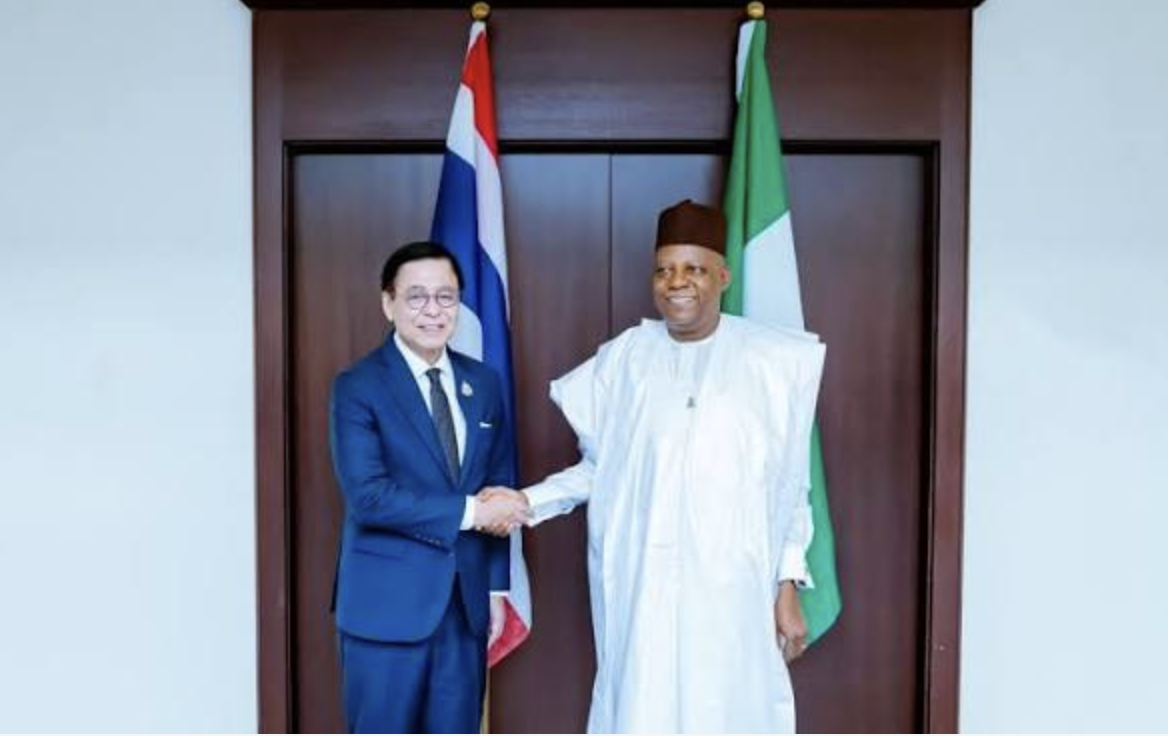
ABUJA, Nigeria — August 27, 2026 — Nigeria and Thailand are seeking to strengthen bilateral cooperation in technology, agriculture and renewable energy, according to an announcement from Nigeria’s State House.
The planned cooperation comes as Nigeria continues efforts to diversify its economy beyond its traditional dependence on oil and expand investment in sectors capable of supporting jobs, industrial development and economic growth.
Agriculture is one area where closer ties with Thailand could be significant. Thailand has extensive experience in agricultural production, food processing and exports, while Nigeria has one of Africa’s largest agricultural sectors. Greater cooperation could support agricultural technology, improved productivity, food processing and stronger agricultural value chains.
The two countries are also looking toward renewable energy. For Nigeria, expanding renewable-energy capacity could help improve electricity access, support businesses and industries, and complement efforts to strengthen the country’s broader power sector.
Technology cooperation could further provide opportunities for knowledge sharing, investment and innovation as Nigeria works to develop industries outside the petroleum sector.
Why it matters for African integration
Although this is a bilateral partnership, its potential impact extends to Africa’s wider economic transformation. Nigeria is the continent’s most populous country and a major market within the African Continental Free Trade Area.
If cooperation with Thailand helps Nigeria expand agricultural processing, renewable energy and technology-based industries, those gains could strengthen Nigeria’s ability to produce and trade more value-added goods across African markets.
The developing Nigeria–Thailand relationship therefore reflects a larger opportunity for African countries: using international partnerships not simply to export resources, but to acquire technology, investment and expertise that can strengthen African production and industrialisation at home.