
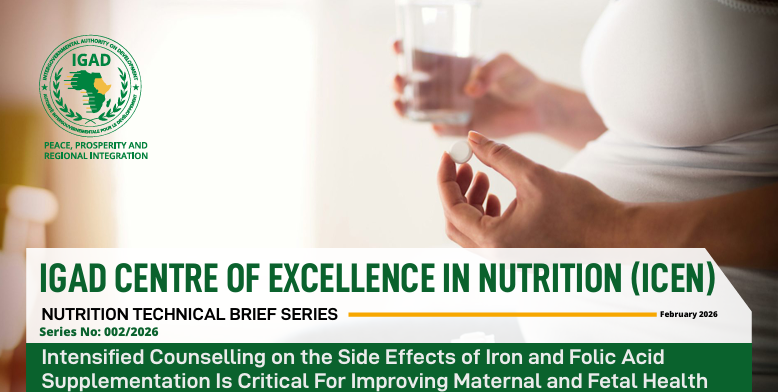
DJIBOUTI — August 10, 2026 — New research highlighted by the Intergovernmental Authority on Development (IGAD) suggests that providing pregnant women with better information about the possible side effects of iron and folic-acid supplements could improve adherence to maternal nutrition programs.
In a substantive release published on August 7, IGAD highlighted findings from research conducted in rural Kenya examining the use of iron and folic-acid supplements among women receiving maternal-health services.
The research found that women who received counselling about potential side effects associated with the supplements were more likely to continue taking them.
Addressing Supplement Side Effects
Iron and folic acid supplementation is commonly included in maternal-health programs to support women during pregnancy and address nutritional deficiencies.
However, some women experience side effects while taking the supplements, which can affect whether they continue using them as recommended.
According to the research highlighted by IGAD, providing women with information about potential side effects and guidance on managing those effects can help improve continued use of the supplements.
The findings point to counselling as an important component of maternal nutrition services rather than relying solely on the distribution of supplements.
IGAD Calls for Better Monitoring
IGAD said the findings support integrating side-effect counselling and improved monitoring of supplement tolerance into maternal-health programs.
Under such an approach, healthcare providers would not only provide iron and folic-acid supplements but would also discuss possible reactions with patients and monitor how well women tolerate the supplements during pregnancy.
The research indicates that understanding what to expect when taking supplements can influence whether women remain consistent with the recommended regimen.
Findings From Rural Kenya
The research focused on women in rural Kenya, where access to healthcare services and continued maternal-health monitoring can present challenges.
The findings provide additional information for health authorities and organizations designing maternal nutrition programs in Kenya and elsewhere in the IGAD region.
IGAD’s involvement also gives the research a regional dimension. The organization brings together countries across the Horn of Africa and East Africa and works on health, food security, development and other cross-border issues.
The August 7 release highlights the potential for maternal-health programs to incorporate more structured counselling alongside nutritional supplementation.
The findings could now inform discussions among health authorities and development organizations about how iron and folic-acid supplementation programs are delivered and monitored across the region.