
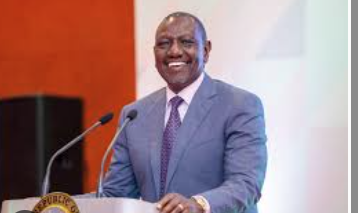
President William Ruto’s decision to grant visa-free entry to citizens of almost every African country marks one of the continent’s boldest commitments to regional integration. Except for Somalia and Libya, where Kenya says additional restrictions remain in place due to security concerns, the policy reflects the belief that Africans should be able to travel, trade, invest, and build relationships across borders with fewer barriers.
The timing of the decision is striking because it comes as South Africa continues to deport undocumented migrants from other African countries. Although the two issues are not identical, they represent two very different approaches to managing migration on the continent.
South Africa’s government argues that deportations are aimed at enforcing immigration laws, protecting national security, and responding to domestic concerns over illegal immigration. Every sovereign nation has the right—and indeed the responsibility—to regulate who enters and remains within its borders. No country can be expected to ignore violations of its immigration laws simply because those involved are fellow Africans.
At the same time, critics contend that the scale and visibility of deportations reinforce a perception that South Africa is becoming increasingly inward-looking at a time when the African Union and the African Continental Free Trade Area (AfCFTA) are encouraging greater movement of people, goods, and services across the continent. Episodes of anti-immigrant sentiment in South Africa over the years have also fueled concerns among many Africans that the country’s relationship with migrants has become increasingly strained.
Kenya, by contrast, is sending a different message. Rather than tightening entry requirements, Nairobi is making it easier for Africans to visit without first obtaining a visa or electronic travel authorization. The government hopes the move will stimulate tourism, attract investment, strengthen business links, and deepen people-to-people connections throughout Africa.
Whether Kenya’s approach ultimately proves successful will depend on implementation. Visa-free travel is only one part of integration. Efficient border management, intelligence sharing, strong security screening, and effective immigration enforcement remain essential. Kenya’s decision to exempt Somalia and Libya demonstrates that even governments committed to open borders recognize that security considerations cannot be ignored.
Neither approach should be viewed in simplistic terms. South Africa faces unique economic pressures, including high unemployment, strained public services, and political demands for stricter immigration enforcement. Kenya, meanwhile, is positioning itself as a regional hub for commerce, aviation, and diplomacy, making greater openness consistent with its long-term economic strategy.
Still, the contrast is difficult to ignore. While South Africa is focused on removing people who are in the country unlawfully, Kenya is reducing barriers for lawful African travelers. One emphasizes enforcement; the other emphasizes mobility. Both governments argue they are acting in their national interest.
The larger question is what kind of Africa the continent hopes to build. The African Union has long envisioned an Africa where borders become less of an obstacle to commerce and cooperation. Agenda 2063 and the AfCFTA both rest on the idea that integration can unlock economic growth and strengthen African unity.
Kenya’s latest policy is a tangible step toward that vision. Whether more African countries follow its example—or choose a more restrictive path—will help determine the pace of continental integration in the years ahead.
For now, Kenya and South Africa illustrate two contrasting philosophies. One is opening more doors to fellow Africans while maintaining targeted security exceptions. The other is reinforcing immigration enforcement within its borders. The challenge for African leaders is finding a balance between protecting national interests and advancing the long-standing goal of a more connected and integrated continent.