
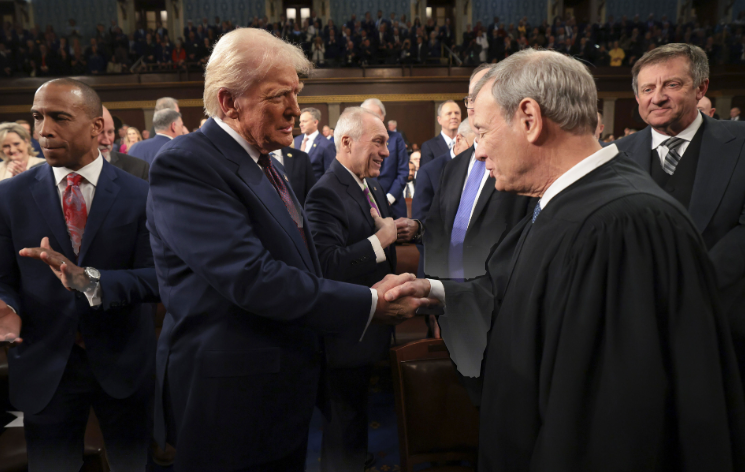
WASHINGTON, D.C. — The U.S. Supreme Court delivered a major constitutional ruling on Tuesday, striking down President Donald Trump’s executive order that sought to limit automatic birthright citizenship for children born in the United States to undocumented immigrants and certain non-permanent residents.
In a closely divided decision, the Court ruled that the executive order violated the Fourteenth Amendment to the United States Constitution, which guarantees citizenship to nearly all individuals born on U.S. soil. The ruling represents one of the most significant legal setbacks for President Trump’s immigration agenda during his second term.
The executive order, signed on President Trump’s first day back in office in 2025, sought to deny automatic U.S. citizenship to children born in the United States if their parents were in the country illegally or held only temporary immigration status. The administration argued that unrestricted birthright citizenship encouraged illegal immigration and was inconsistent with the original meaning of the Constitution’s Citizenship Clause.
Writing for the majority, Chief Justice John Roberts reaffirmed the long-standing constitutional interpretation that the Citizenship Clause does not distinguish between children based on their parents’ immigration status. The Court emphasized that the language of the Fourteenth Amendment contains no requirement that a child’s parents be lawful permanent residents or U.S. citizens.
The decision also reaffirmed the Supreme Court’s landmark 1898 ruling in United States v. Wong Kim Ark, which established that nearly all children born in the United States are citizens at birth, regardless of their parents’ nationality or immigration status.
Immigrant rights organizations welcomed the ruling, describing it as a victory for constitutional protections and equal citizenship. They argued that allowing the executive order to take effect would have left hundreds of thousands of children in legal uncertainty and potentially without recognized citizenship. Estimates cited during the case suggested that approximately 255,000 children born each year could have been affected by the policy.
Supporters of President Trump’s policy, however, argued that birthright citizenship has become a magnet for illegal immigration and maintained that Congress or the courts should revisit the historical interpretation of the Fourteenth Amendment. They contended that the constitutional phrase “subject to the jurisdiction thereof” should exclude children born to parents who are in the country unlawfully.
The ruling preserves the long-established principle that birth on U.S. soil generally confers American citizenship, with only narrow exceptions such as children born to foreign diplomats. Legal scholars say the decision reinforces more than a century of constitutional precedent and significantly limits the ability of future presidents to alter citizenship rules through executive action alone