
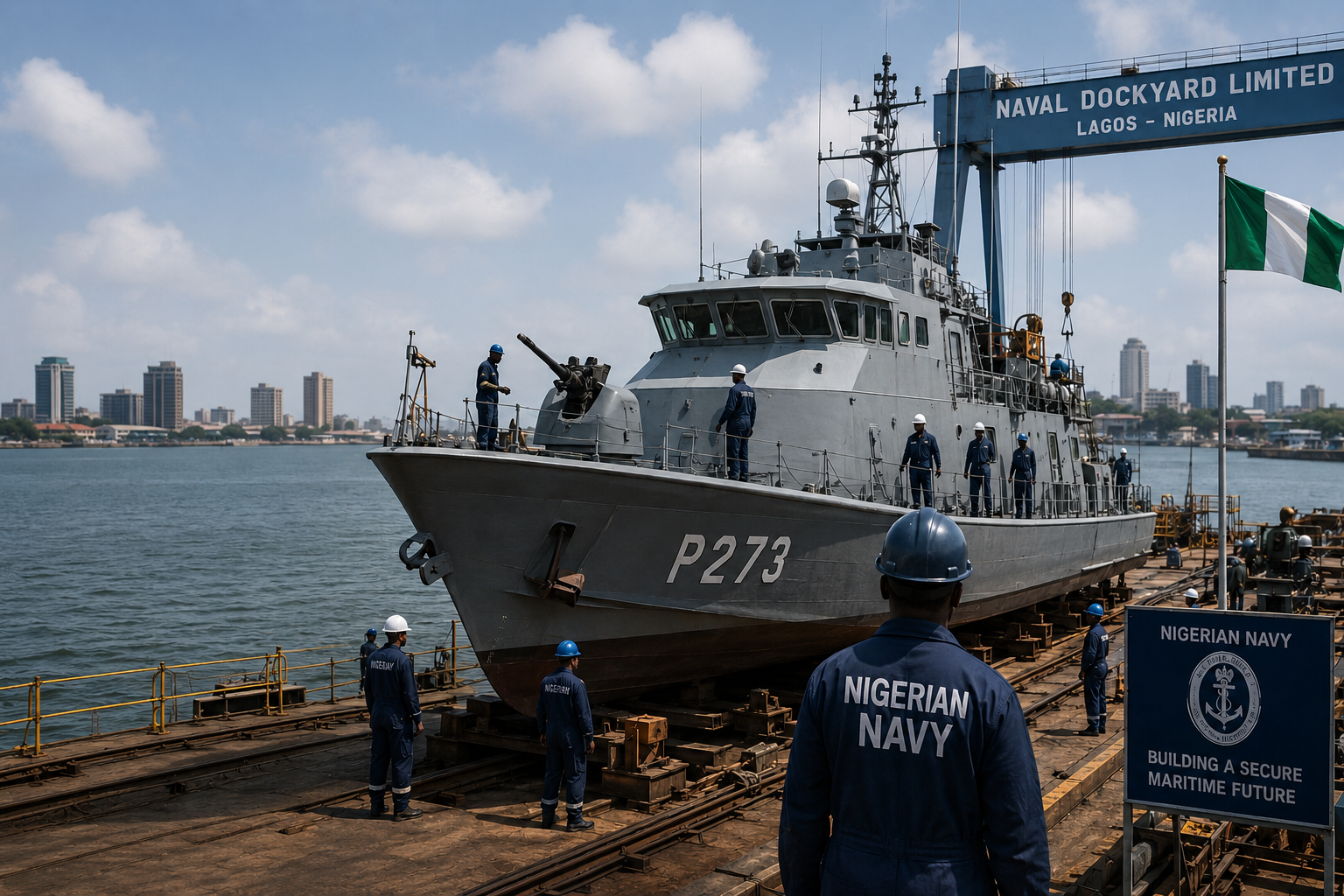
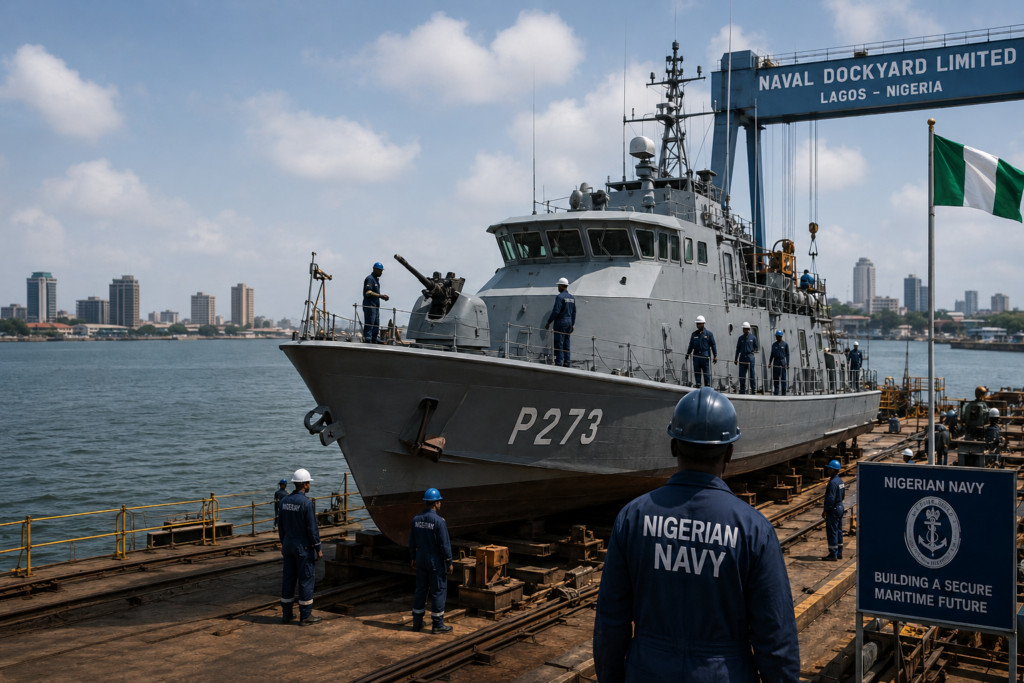
Nigeria is accelerating efforts to strengthen its maritime security capabilities by expanding local naval shipbuilding and maintenance operations in Lagos, reducing dependence on foreign-built vessels while increasing its ability to combat piracy, oil theft, and smuggling in the Gulf of Guinea.
According to reports and maritime security analyses, the Nigerian Navy has been investing heavily in indigenous shipbuilding through the government-owned Naval Dockyard Limited, where locally designed patrol boats and Seaward Defence Boats are being constructed and maintained. The initiative forms part of Nigeria’s broader push for maritime self-reliance and enhanced regional security operations.
The locally produced patrol vessels are already being deployed in operations targeting crude oil theft, piracy, illegal fishing, arms trafficking, and smuggling activities across Nigerian waters and the wider Gulf of Guinea. Nigerian naval officials say the expansion of domestic shipbuilding capacity will lower maintenance costs, reduce dependence on foreign contractors, and improve operational readiness.
Nigeria has also increased naval deployments as part of multinational maritime security operations. During Exercise Obangame Express 2026, the Nigerian Navy deployed 10 warships, helicopters, and special operations units to strengthen anti-piracy operations in one of the world’s most strategically important shipping corridors.
Recent analysis published by Al Jazeera noted that piracy incidents in the Gulf of Guinea have declined significantly in recent years, aided by stronger regional naval cooperation and increased maritime surveillance capabilities.
The expansion of Nigeria’s indigenous naval industry is increasingly viewed as a strategic national security project, especially as the country seeks to protect offshore oil infrastructure and secure commercial shipping routes that are vital to both Nigeria’s economy and regional trade.