
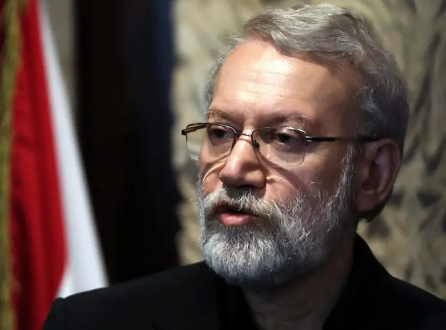
Two senior Iranian figures, including a top security official and the head of the Revolutionary Guard’s Basij militia, were killed in overnight strikes, marking a significant escalation in the ongoing conflict involving Iran, Israel, and the United States.
Israeli Defense Minister Israel Katz said Tuesday that Ali Larijani and Gen. Gholam Reza Soleimani were “eliminated last night,” describing the operation as a direct blow to Iran’s leadership structure.
The reported killings follow the death of Iran’s Supreme Leader, Ali Khamenei, who was killed in an airstrike on Feb. 28 during the opening phase of the war launched by the United States and Israel. Several other senior figures within Iran’s ruling establishment have also been killed in subsequent strikes.
Iranian state media did not immediately confirm the deaths of Larijani or Soleimani but indicated that an official statement from Larijani’s office would be released.
According to the Los Angeles Times, the strikes are part of a broader Israeli campaign targeting Iran’s command infrastructure, including “a wide-scale wave of strikes” across Tehran aimed at missile launch sites, air defenses, and command centers.
Larijani, a prominent figure from one of Iran’s most influential political families, previously served as speaker of parliament and secretary of the Supreme National Security Council. He had also been a key adviser on nuclear negotiations. Soleimani, meanwhile, led the Basij militia, a paramilitary force long accused by Western governments of suppressing domestic dissent.
Israel’s military described the Basij under Soleimani as a central force in internal crackdowns, alleging it carried out arrests and violent repression during protests.
Iran Retaliates with Regional Strikes
In response, Iran launched new waves of missiles and drones targeting Israel and Gulf Arab states. Air defense systems were activated across the region, including in the United Arab Emirates, where authorities briefly closed airspace amid incoming threats.
Debris from intercepted missiles killed a civilian near Abu Dhabi, while a drone strike hit an oil facility in Fujairah. Additional interceptions were reported in Saudi Arabia and Qatar, underscoring the widening geographic scope of the conflict.
Iranian-backed groups also targeted U.S. interests in Iraq, including an attempted drone attack on the U.S. Embassy in Baghdad. Iraqi security officials said the drones were intercepted before impact.
Strait of Hormuz Crisis Deepens
The conflict has severely disrupted maritime traffic through the Strait of Hormuz, a critical chokepoint through which roughly 20% of global oil supplies pass. Iranian strikes have targeted multiple vessels, including a tanker off Fujairah, contributing to mounting fears of a global energy crisis.
Brent crude prices have surged above $100 per barrel—an increase of more than 40% since the conflict began—intensifying pressure on global markets.
Iranian parliamentary speaker Mohammad Bagher Qalibaf defended the country’s actions, stating that continued attacks were a necessary response to ongoing military strikes.
U.S. Pushes for Naval Support
U.S. President Donald Trump said he has urged several allied nations to deploy naval forces to keep the Strait of Hormuz open. However, those appeals have so far yielded limited support, with allies expressing reluctance to enter a conflict lacking a clear endgame.
Meanwhile, Israel has expanded operations beyond Iran, conducting strikes in Tehran and intensifying attacks on Hezbollah positions in Beirut. Israeli officials indicated that additional ground operations in southern Lebanon may be under consideration.
The humanitarian toll continues to rise. Iranian authorities report more than 1,300 deaths since the conflict began, while in Lebanon, over 1 million people have been displaced. Casualties have also been reported in Israel and among U.S. forces stationed in the region.
As hostilities escalate across multiple fronts, the risk of a broader regional war—and its global economic consequences—appears to be growing.