
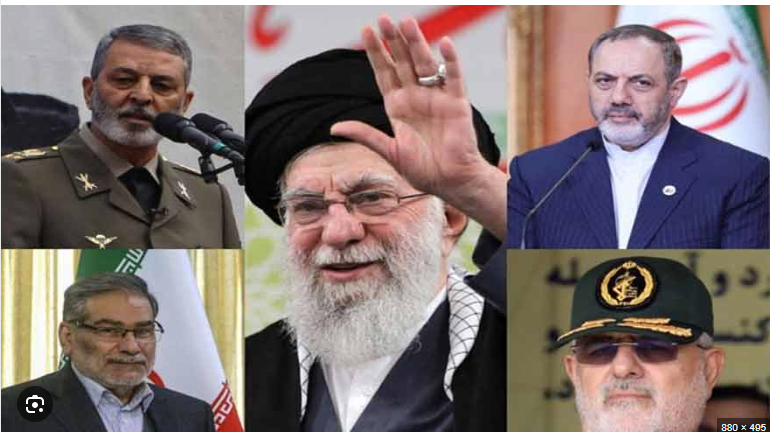
The reported killing of Ali Larijani represents more than the loss of another senior Iranian figure; it underscores a turning point in the ongoing U.S.–Israeli campaign against Tehran. What has emerged is a systematic effort to dismantle Iran’s leadership structure—one of the most assertive applications of a decapitation strategy in contemporary conflict.
Larijani’s role extended well beyond formal titles. In the aftermath of Ali Khamenei’s death, he had become a central node in coordinating state authority and wartime decision-making. His removal further fragments an already strained command hierarchy, intensifying internal rivalries and succession tensions. While such fractures do not necessarily signal imminent regime collapse, they do erode Tehran’s capacity to respond in a unified and disciplined manner under sustained external pressure.
From a purely strategic lens, leadership targeting carries clear advantages. It disrupts command-and-control systems, degrades operational coherence, and forces surviving officials into a precarious balancing act between visibility and survival. Over time, this dynamic weakens institutional confidence, not only within Iran’s governing apparatus but also among its regional partners and affiliated militias.
This leadership attrition has coincided with significant material losses. Coordinated air campaigns have reportedly degraded missile inventories, disrupted drone production, and damaged elements of Iran’s nuclear infrastructure. The sharp reduction in missile launches suggests both logistical strain and operational dislocation. At the same time, the erosion of Iran’s air defense network has enabled near-uncontested aerial operations by opposing forces. Naval capabilities have also been diminished, though asymmetric threats—particularly in strategic waterways—remain viable.
Regionally, Tehran’s proxy network appears increasingly strained. Groups such as Hezbollah and Hamas—once central to Iran’s forward defense doctrine—have been significantly weakened. Other aligned actors, including the Houthis and Iraqi militias, have played more limited roles in the current phase of the conflict. This fragmentation undercuts Iran’s long-standing ability to project influence across multiple fronts simultaneously.
Despite these developments, the broader strategic picture remains contested. There is a widespread preference—among policymakers and the public alike—for a diplomatic resolution. However, that preference has been shaped by years of frustration, as Iran has often been perceived as unwilling to make substantive compromises, while continuing to support proxy forces and, at times, directly or indirectly engage its regional adversaries. This dual reality has hardened views in some quarters that diplomacy alone may be insufficient without sustained pressure.
From the perspective of the African Union, the emphasis remains firmly on de-escalation and negotiated settlement. African leaders, many of whom have experience navigating complex internal and regional conflicts, have consistently warned that military campaigns—particularly those targeting leadership structures—can produce unintended consequences, including state fragmentation and prolonged instability. Their position reflects a broader concern within the Global South: that the collapse or severe weakening of a central government without a clear political transition risks creating vacuums that external actors or extremist groups may exploit.
Ultimately, the killing of Larijani encapsulates both the effectiveness and the inherent risks of the current approach. The campaign has, in a relatively short period, inflicted substantial damage on Iran’s military capabilities and political cohesion. Yet the central question remains unresolved: whether these tactical gains will translate into durable security outcomes, or merely reshape the conflict into a new and potentially more unpredictable phase.
What is clear is that the trajectory of this war will depend not only on continued military pressure but also on the ability to construct a viable post-conflict framework. Without such a framework, even the most successful operations risk yielding outcomes that are strategically ambiguous at best—and destabilizing at worst.