
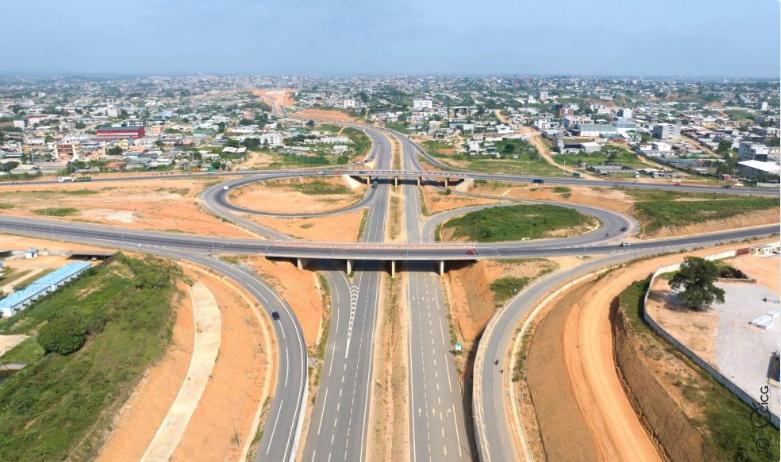
ABIDJAN, Côte d’Ivoire — August 25, 2026 — Côte d’Ivoire is continuing to advance its 2026–2030 National Development Plan, an ambitious development agenda that government communications describe as involving approximately €175 billion in planned investment and development ambitions.
The plan is expected to guide Côte d’Ivoire’s next phase of economic and social development, with investment playing a central role in strengthening the country’s productive capacity and supporting longer-term growth.
The government’s activities this month also include initiatives and preparations involving education, public administration and road-safety awareness, highlighting the connection between large-scale economic investment and improvements to institutions and human development.
Côte d’Ivoire’s development strategy carries significance beyond its national borders. The country is one of West Africa’s largest economies and serves as an important transportation, financial, commercial and logistics hub for the wider region.
Infrastructure improvements in Côte d’Ivoire can therefore affect trade flows involving neighboring countries, including landlocked West African economies that depend on regional ports and transportation corridors to reach international markets.
That makes implementation of the National Development Plan particularly relevant to the Economic Community of West African States (ECOWAS) and the broader African integration agenda.
More efficient roads, logistics systems, industrial infrastructure and public institutions could help reduce the cost of moving goods while strengthening regional supply chains.
The development programme could also support implementation of the African Continental Free Trade Area (AfCFTA). The continental agreement seeks to expand intra-African commerce, but achieving that objective depends heavily on national investments that make cross-border trade faster, cheaper and more reliable.
Industrial investment is equally important. Expanding domestic production could allow Côte d’Ivoire to move further into value-added manufacturing while creating opportunities to supply larger regional and continental markets.
Education and stronger public administration will also be important to sustaining that transformation. Infrastructure can connect economies, but skilled workers and capable institutions are necessary to manage increasingly complex regional trade and investment relationships.
For Côte d’Ivoire, the 2026–2030 National Development Plan is therefore more than a domestic economic programme. Given the country’s position within West African trade and transportation networks, its success could contribute to the wider development of ECOWAS and AfCFTA corridors.
As implementation progresses, the key question will be how effectively planned investment is converted into infrastructure, industries, jobs and stronger regional economic connections.