
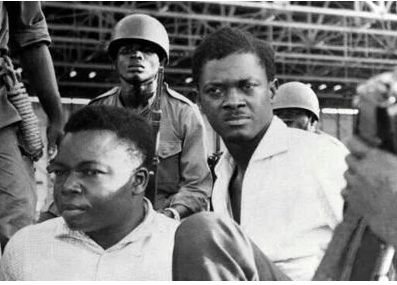
BRUSSELS, March 17, 2026 — A court in Brussels has ruled that Etienne Davignon, a 93-year-old former Belgian diplomat, must stand trial for his alleged role in the 1961 assassination of Patrice Lumumba, the first prime minister of the independent Democratic Republic of the Congo.
The decision marks the first time a Belgian official will face criminal prosecution in connection with Lumumba’s killing, more than six decades after the event. The ruling follows years of legal efforts, including a lawsuit filed in 2011 by Lumumba’s family seeking accountability for his death.
Davignon, who was a junior diplomatic intern stationed in Kinshasa at the time, later rose to prominence as a senior European statesman, serving as a vice-president of the European Commission. He is now the only surviving individual among 10 Belgians originally named in the 2011 case.
Prosecutors accuse Davignon of participation in war crimes, citing his alleged involvement in the unlawful detention, transfer, and what the court described as the “humiliating and degrading treatment” of Lumumba prior to his execution. In its ruling, the court also broadened the scope of the trial to include the killings of Lumumba’s political allies, Maurice Mpolo and Joseph Okito, who were executed alongside him.
While the decision remains subject to appeal, legal representatives for Lumumba’s family expressed cautious optimism, indicating that proceedings could begin as early as 2027.
Lumumba, a central figure in Africa’s anti-colonial movement, became prime minister in 1960 shortly after Congo gained independence from Belgium. His tenure was short-lived; he was overthrown in a coup within months and executed by firing squad in January 1961. His body was later dissolved in acid in an apparent effort to eliminate evidence.
Belgium has long faced scrutiny over its role in the events surrounding Lumumba’s death. In 2002, the Belgian government formally apologized for its “moral responsibility” in the assassination. Two decades later, in 2022, Belgium returned Lumumba’s only known remains—a gold-capped tooth—to his family in a symbolic gesture aimed at reconciliation.
The upcoming trial is expected to draw renewed international attention to one of the most consequential and controversial episodes in post-colonial African history.