
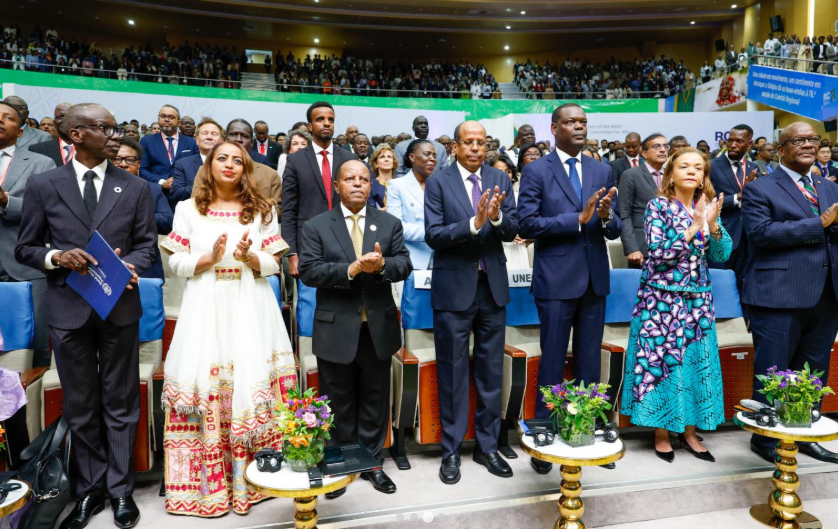
ADDIS ABABA, Ethiopia — August 25, 2026 — African Union Commission Chairperson Mahmoud Ali Youssouf has called for greater African “health sovereignty,” urging governments to strengthen domestic health financing, emergency preparedness, digital innovation and local production of essential medical products.
Youssouf delivered the message during the 76th WHO Regional Committee for Africa in Addis Ababa, where health ministers and senior officials from 47 African countries are meeting to discuss some of the continent’s most pressing health priorities.
The AU Commission Chairperson addressed the gathering alongside Ethiopian President Taye Atske Selassie and World Health Organization Director-General Dr. Tedros Adhanom Ghebreyesus.
At the center of the AU’s message is the need for Africa to take greater responsibility for financing and strengthening its own health systems. The continent continues to depend heavily on imported medicines, vaccines and medical supplies, while many national health programs also rely on external financing.
The COVID-19 pandemic exposed the risks of that dependence as global supply-chain disruptions and competition for vaccines left many African countries struggling to secure essential products.
Expanding African pharmaceutical and vaccine manufacturing could therefore become an important component of both health security and economic integration. Producing more medicines and medical products within Africa could reduce dependence on overseas suppliers while creating jobs, strengthening regional supply chains and expanding intra-African trade.
Youssouf also emphasized preparedness, digital innovation and stronger continental health institutions. Greater coordination among national governments, the African Union and African health institutions could improve the continent’s ability to detect outbreaks, share information and respond collectively to future health emergencies.
From a regional integration perspective, health sovereignty also requires cooperation across borders. Infectious diseases do not stop at national boundaries, making coordinated surveillance, emergency response, medical supply chains and health standards increasingly important.
The discussions in Addis Ababa reinforce a broader African Union objective: building a continent capable of financing, producing and coordinating more of what it needs internally.
If African countries can combine stronger domestic health investment with continental manufacturing and regional cooperation, health sovereignty could become more than a public-health objective. It could also support African industrialization, resilience and deeper continental integration.