
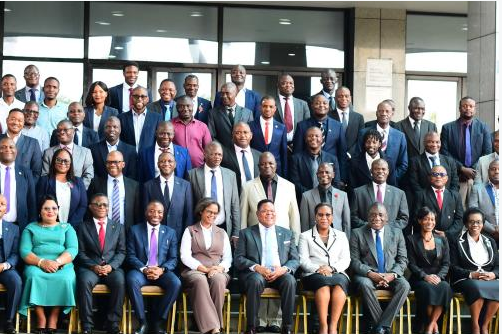
LILONGWE, Malawi – Malawi, in collaboration with the Southern African Development Community (SADC) and INTERPOL, has concluded a five-day consultation aimed at strengthening the country’s response to transnational organized crime and enhancing regional security cooperation.
Held in Lilongwe from November 9 to 13, the consultation brought together government officials, security experts and regional partners to examine emerging criminal threats and develop strategies to combat cross-border criminal networks operating in Southern Africa.
According to the SADC Secretariat, participants developed a draft strategic framework and a corresponding roadmap intended to guide future efforts against a range of transnational crimes. The proposed measures focus on key areas of concern, including human trafficking, illicit trade and financial crime, which continue to pose significant challenges to regional stability, security and economic development.
The consultation forms part of wider regional efforts to improve coordination among member states in addressing increasingly sophisticated criminal activities that often transcend national borders. Stakeholders emphasized the importance of intelligence sharing, stronger legal frameworks and enhanced cooperation between law enforcement agencies to effectively tackle organized crime networks.
Officials noted that crimes such as trafficking and illicit financial flows undermine governance, hinder economic growth and threaten the well-being of communities across the region. The draft framework is expected to serve as a foundation for strengthening national and regional responses to these challenges.
The collaboration between Malawi, SADC and INTERPOL highlights a growing commitment to collective action in addressing security threats that require coordinated regional solutions. By developing a common strategic direction, participants aim to improve prevention, enforcement and prosecution efforts while strengthening institutional capacity.
Status: The consultation has been completed and a draft strategic framework and roadmap have been developed. However, the proposed national strategy has not yet been formally adopted, and further review and approval processes are expected before implementation can proceed.