
Wenger joins African coaches for Major Review of Africa’s historic 2026 WC performance
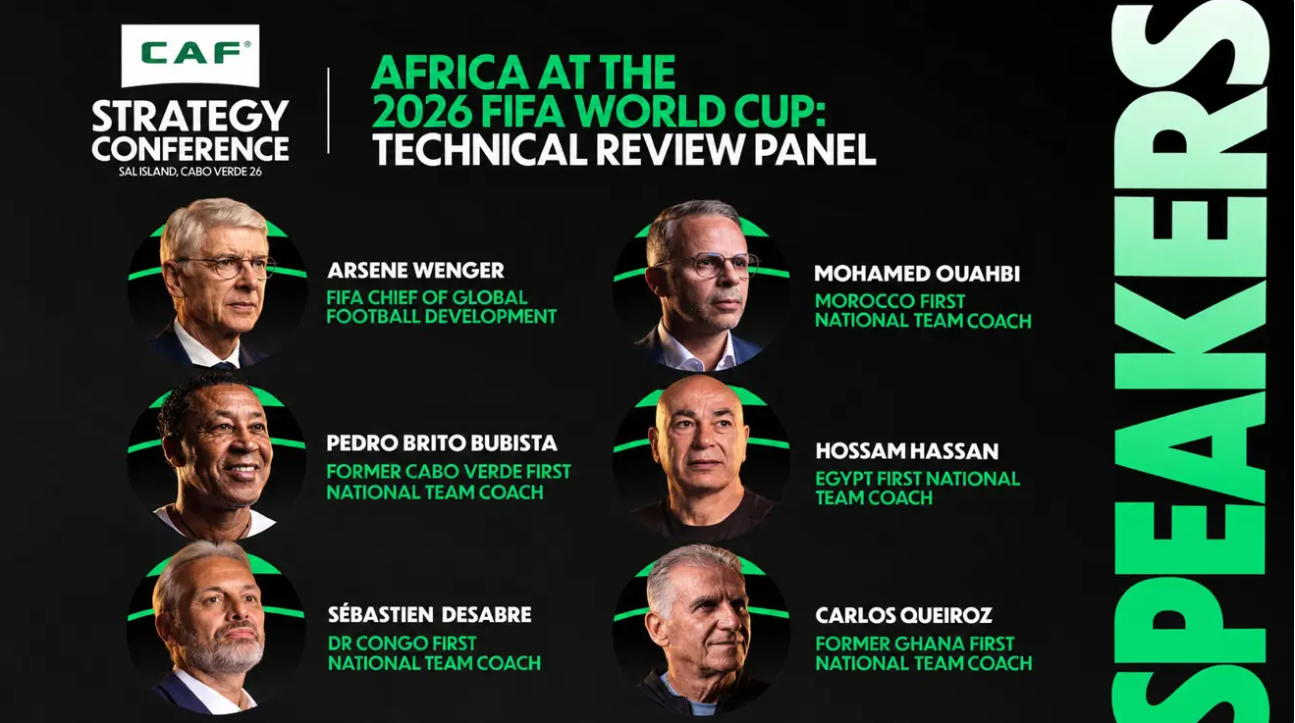
SANTA MARIA, CABO VERDE — October 6, 2026 — The Confederation of African Football (CAF) has confirmed a high-profile technical review panel featuring legendary former Arsenal manager Arsène Wenger and several prominent national-team coaches as part of its upcoming CAF Strategy Conference in Cabo Verde.
The panel will examine Africa’s performance at the 2026 FIFA World Cup, a historic tournament in which a record ten African countries participated and nine advanced to the knockout rounds.
The review represents an important opportunity for African football authorities to move beyond celebrating tournament achievements and begin identifying the tactical, technical and institutional improvements necessary to strengthen the continent’s competitiveness at future international competitions.
Leading Football Experts Assemble for Technical Review
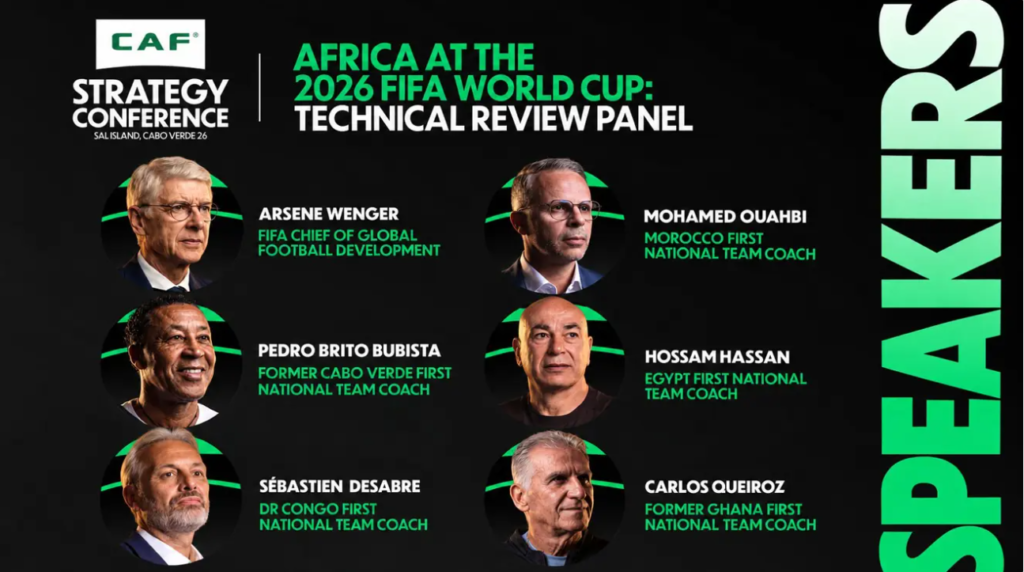
According to CAF’s October 6 announcement, the technical panel will feature Wenger alongside Mohamed Ouahbi, Pedro “Bubista” Brito, Hossam Hassan, Sébastien Desabre and Carlos Queiroz.
The participants bring extensive experience in international football, player development, tactical preparation and national-team management.
Wenger, widely recognized for his long managerial career at Arsenal and his subsequent work in global football development, brings an international perspective on coaching education, technical innovation and long-term player development.
The involvement of African national-team coaches is particularly significant because their experiences provide direct insight into the challenges and opportunities facing African football.
Their discussions are expected to examine how African teams prepared for the tournament, approached different opponents, managed tactical adjustments and competed against established international football powers.
Africa’s Historic 2026 World Cup Campaign
The 2026 FIFA World Cup marked a significant moment for African football.
For the first time, ten African nations participated in the tournament, reflecting the expansion of the competition and the continent’s growing representation on football’s biggest stage.
Even more remarkable was the advancement of nine African teams into the knockout rounds.
These achievements provide a foundation for evaluating whether African football has entered a new era of international competitiveness.
However, the CAF technical review is expected to look beyond participation numbers and tournament results.
Important questions include whether African teams demonstrated consistent tactical development, whether domestic football structures adequately supported national-team preparation and how improvements in coaching education could translate into stronger performances.
The central challenge is determining how individual tournament successes can become lasting institutional progress.
Moving Beyond Tournament Success Toward Sustainable Development
For CAF, the technical review offers an opportunity to connect World Cup performance with broader football development across the continent.
African football has long produced internationally recognized players, many of whom compete in leading European and international leagues.
Yet the challenge of translating individual talent into consistent national-team success remains a major concern.
The conference provides an opportunity to examine several areas of development, including youth academies, coaching qualifications, technical infrastructure, scouting systems, sports science and national-team preparation.
One particularly important consideration is whether lessons from the 2026 World Cup can be incorporated into domestic leagues and national football development programmes.
If successful, such an approach could help strengthen the relationship between grassroots football, professional clubs and national teams.
The Road to the 2030 FIFA World Cup
The timing of the technical review is significant.
With the next FIFA World Cup scheduled for 2030, African football authorities have an opportunity to translate the findings of the 2026 tournament into practical development strategies.
Four years provides a meaningful planning period for improving coaching structures, expanding youth development programmes and strengthening technical preparation.
However, the effectiveness of these initiatives will depend on whether CAF and its member associations establish clear implementation priorities.
Technical recommendations alone will not guarantee progress.
Sustained improvement will require investment, institutional coordination, accountability and the willingness of national football associations to adopt long-term development policies.
The review could therefore become an important benchmark for measuring how seriously African football authorities approach the next phase of continental development.
Why This Matters for African Football
Africa’s performance at the 2026 World Cup offers more than an opportunity to celebrate sporting achievements.
It also raises questions about the continent’s ability to build competitive institutions capable of producing consistent international success.
The involvement of Wenger and experienced African coaches creates an opportunity to combine global technical expertise with practical knowledge of African football environments.
For CAF’s 54 member associations, the broader objective should be to ensure that lessons learned at the highest level are shared throughout the continent.
Smaller football associations, developing domestic leagues and emerging youth programmes could benefit significantly from coordinated technical development initiatives.
The challenge will be ensuring that the conference produces measurable improvements rather than recommendations that remain on paper.
From Historic Results to Lasting Progress
The CAF Strategy Conference arrives at a defining moment for African football.
The continent has demonstrated its ability to compete on the world stage, but maintaining that progress will require a coordinated approach to football development.
The participation of Wenger, Ouahbi, Brito, Hassan, Desabre and Queiroz provides an opportunity for meaningful technical discussions about the future of African football.
Ultimately, the success of the review will not be determined by the prominence of its participants or the conclusions reached during the conference.
It will be measured by whether African football institutions transform those conclusions into stronger coaching systems, better development pathways and more competitive national teams.
The central question is no longer simply how African teams performed at the 2026 World Cup, but whether CAF and its member associations can turn those performances into a lasting competitive advantage by 2030.
Original publication date: October 6, 2026
Editorial note: This article is dated October 6, when CAF announced the panel. It describes the technical review as forthcoming rather than suggesting the conference or review had already concluded. Analysis of possible outcomes is distinguished from confirmed CAF decisions.