
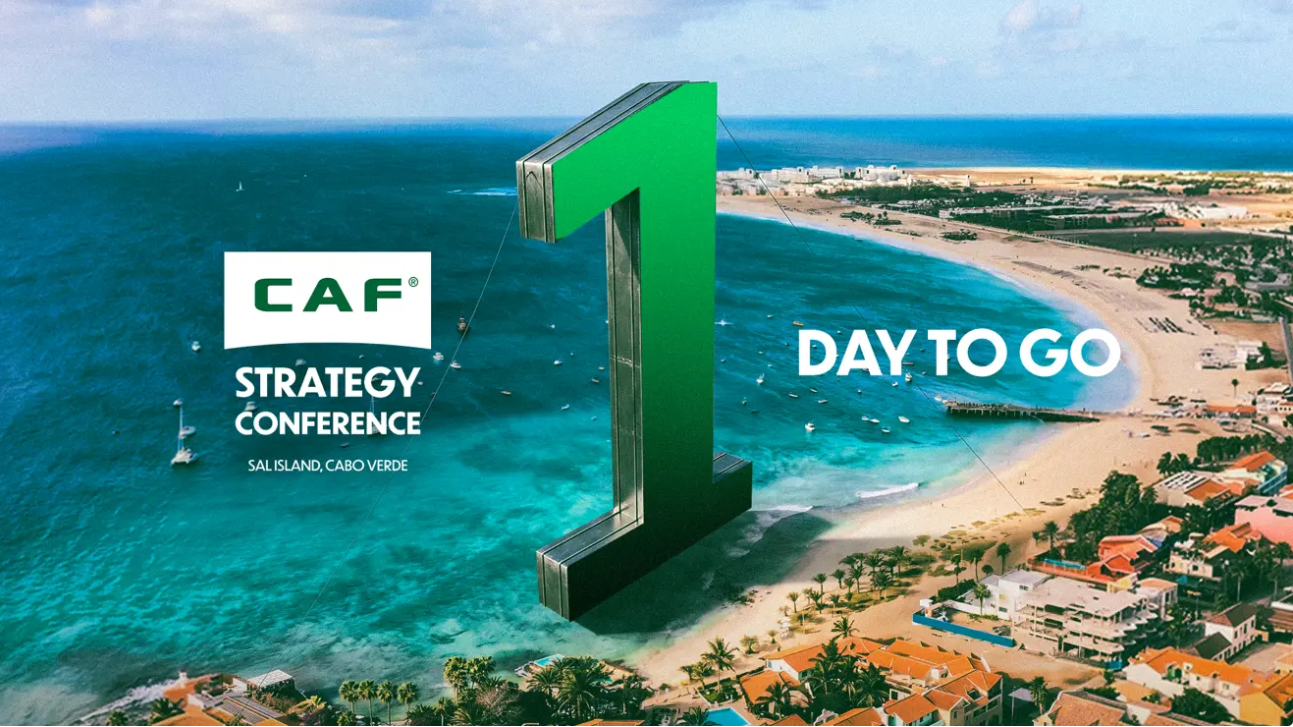
SANTA MARIA, CABO VERDE — The Confédération Africaine de Football (CAF) opens its three-day Strategy Conference on Wednesday, October 7, bringing together football leaders from across the continent to discuss the future of African football, strengthen national development structures and establish priorities for sustainable growth.
The conference, taking place in Santa Maria on Sal Island from October 7–9, brings together presidents of CAF’s 54 member associations, national-team coaches, CAF officials, zonal union representatives and international technical experts.
According to CAF, the gathering is intended to move beyond discussions of Africa’s recent international football achievements and focus on practical measures that can strengthen the sport at every level.
The central challenge is how to translate Africa’s footballing talent and international competitiveness into lasting improvements in coaching, youth development, administration and national football infrastructure.
Day One: Building the Foundations of African Football
The conference’s opening day focuses primarily on the technical foundations of football development.
Discussions will examine coaching standards, youth development systems, technical departments and the creation of sustainable football programmes across CAF’s member associations.
These areas are critical because African football’s future depends not only on the performance of senior national teams but also on the institutions responsible for developing players long before they reach international competition.
For many African football associations, building effective youth academies, expanding coach education and establishing structured development pathways remain important priorities.
A central question is whether CAF can help create development systems that provide young players with consistent opportunities regardless of the financial resources available to their national associations.
The discussions also provide an opportunity to consider how national football associations can strengthen technical cooperation, exchange expertise and improve the quality of coaching throughout the continent.
October 8: CAF’s 54 Member Associations Examine the Continental Strategy
On Thursday, October 8, attention shifts toward CAF’s broader institutional strategy.
Presidents of the 54 member associations are expected to examine the direction of African football and the priorities needed to strengthen its development over the coming years.
Their participation is particularly significant because national associations are responsible for implementing many of the policies and programmes developed at the continental level.
While CAF provides continental leadership, competitions and development frameworks, the success of those initiatives depends heavily on national implementation.
That relationship raises important questions about governance, institutional capacity, funding and accountability.
A continental strategy can establish shared objectives, but its impact ultimately depends on whether individual associations have the technical expertise, financial resources and administrative systems necessary to put those objectives into practice.
October 9: Lessons From the 2026 FIFA World Cup
The conference’s final day, Friday, October 9, will focus substantially on examining Africa’s performance at the 2026 FIFA World Cup.
The review offers CAF and its member associations an opportunity to assess the continent’s participation in the tournament and identify lessons for future international competitions.
The discussions are expected to provide a platform for evaluating technical performance, coaching approaches and the preparation of African national teams.
However, the significance of this review extends beyond match results.
International tournaments offer an opportunity to evaluate the effectiveness of national football development systems, including player preparation, tactical education and the transition from youth football to senior international competition.
For CAF, the challenge will be determining how lessons from the World Cup can inform improvements across all 54 member associations rather than benefiting only the countries that qualified for the tournament.
From International Success to Sustainable Development
African football has long produced internationally recognized players and competitive national teams.
Yet the development of football institutions across the continent remains uneven.
Some countries have established professional leagues, organized youth systems and relatively strong technical infrastructure. Others continue to face difficulties involving resources, facilities, administration and access to specialized coaching.
These differences highlight why continental coordination matters.
A stronger African football system requires more than producing talented players. It also requires institutions capable of identifying, training and supporting that talent over time.
CAF’s Strategy Conference creates an opportunity to examine how continental cooperation can reduce these gaps.
Potential areas for longer-term improvement include better coaching education, stronger youth competitions, improved technical administration and more consistent investment in grassroots football.
The challenge will be converting conference discussions into programmes that can be implemented, measured and sustained.
African Football Development and the Broader Integration Agenda
The conference also carries significance beyond football.
CAF’s structure, which brings together 54 national associations under one continental governing organization, provides an example of how African countries coordinate activities through shared institutions while retaining their national identities.
This approach has parallels with the African Union’s wider efforts to promote continental cooperation through common strategies and regional institutions.
Although CAF operates independently of the African Union’s political and economic integration structures, both illustrate the opportunities and challenges associated with coordinating policies across numerous sovereign states.
Football also creates opportunities for regional cooperation through cross-border competitions, technical exchanges, sports infrastructure and youth development.
Stronger national leagues and regional competitions could contribute to economic activity through broadcasting, sponsorship, tourism and employment.
However, these benefits depend on effective management, investment and sustained institutional cooperation.
The Real Test: Implementation After Cabo Verde
CAF has emphasized the importance of producing practical outcomes from the conference.
That objective makes the gathering particularly significant.
Across African institutions, one recurring challenge has been ensuring that continental strategies lead to measurable results at the national level.
Football faces a similar test.
The success of the Cabo Verde conference will not be determined solely by the number of participants, presentations or agreements announced.
It will depend on whether the discussions lead to concrete development programmes, clearly defined responsibilities, realistic funding arrangements and mechanisms for measuring progress.
For CAF’s 54 member associations, the most important outcomes may be those that strengthen football beyond the continent’s most successful national teams.
Improvements in grassroots coaching, youth opportunities and national technical structures could help establish a more consistent foundation for African football over the coming decade.
Conclusion: A Defining Opportunity for African Football
As CAF’s football leadership gathers in Cabo Verde, the conference represents an opportunity to consider what comes next for the continent’s most popular sport.
Africa’s international football ambitions are closely connected to the strength of its domestic and regional development systems.
The three-day gathering places those systems at the center of the conversation.
Whether the conference produces lasting change will become clearer as CAF and its member associations move from strategy discussions toward implementation.
For African football, the question is no longer simply how to compete successfully on the world stage. It is how to build institutions capable of sustaining that competitiveness for generations.