
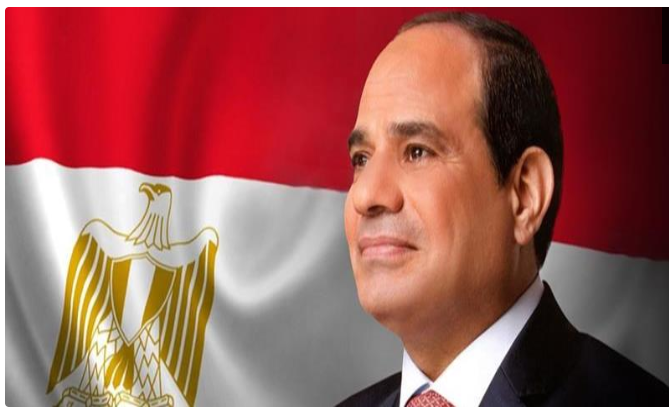
NEW CAPITAL, Egypt — September 28, 2026 — Egypt has placed mining investment firmly on its national economic agenda as President Abdel Fattah el-Sisi attended the opening of the fifth Egypt Mining Forum 2026, bringing government officials, African representatives and international mining companies together to discuss investment, exploration and the future of the country’s mineral sector.
The two-day forum, being held September 28–29 in Egypt’s New Capital, is taking place under the theme “Unlocking the Exploration Potential of Egypt and the Arabian-Nubian Shield.” According to Egypt’s State Information Service, the gathering includes major international mining companies as well as mining ministers and officials from Arab and African countries.
The forum comes as Egypt seeks to attract greater international investment into mineral exploration while reforming the regulatory environment surrounding the industry.
Egyptian Petroleum and Mineral Resources Minister Karim Badawi said recent reforms are intended to improve the investment climate for exploration and prospecting while also encouraging downstream industries that can increase the value generated from mineral resources inside Egypt.
That distinction—between extracting minerals and building industries around them—could prove especially significant for the wider African continent.
El-Sisi Meets AngloGold Ashanti CEO
Mining investment also reached the presidential level during the forum.
On the sidelines of the gathering, President el-Sisi met Alberto Calderon, chief executive officer of AngloGold Ashanti, one of the world’s major gold-mining companies.
The meeting underscores Egypt’s effort to engage major international mining companies directly as it seeks additional exploration and investment.
The forum is also expected to announce results from investment opportunities involving gold, phosphate, talc and kaolin exploration. Egypt has been introducing an open-block system intended to streamline the allocation of mining areas and accelerate the beginning of exploration and mining operations.
But the larger significance extends beyond Egypt.
Africa’s Bigger Mining Question
Africa possesses some of the world’s most strategically important mineral resources. Yet mineral wealth does not automatically translate into industrial development.
The central question facing many African economies is increasingly not simply:
What minerals can Africa extract?
It is:
How much of the economic value created from those minerals can remain in Africa?
For decades, many African economies have participated in global mineral supply chains primarily as exporters of raw or minimally processed resources. Higher-value stages—including refining, processing, component manufacturing and production of finished goods—can occur elsewhere.
That means an African country can possess valuable mineral deposits while capturing only part of the economic activity ultimately generated by those resources.
Egypt’s emphasis on attracting mining investment while encouraging downstream industries therefore places the country’s strategy within a much broader African discussion about beneficiation, industrialization and mineral value chains.
Instead of viewing mining exclusively as an extraction industry, governments across the continent are increasingly examining how mineral resources can support processing facilities, manufacturing, infrastructure development, technical skills and regional supply chains.
From Mining to Industrialization
The distinction could become increasingly important as global demand grows for minerals connected to energy, technology, infrastructure and manufacturing.
African governments face choices about whether new investment primarily expands extraction capacity or also creates opportunities for domestic and regional industries.
Processing minerals closer to where they are extracted could potentially create additional economic activity, but developing those industries also requires substantial electricity generation, transportation infrastructure, financing, technology, skilled workers and competitive regulatory environments.
For that reason, mineral beneficiation cannot be achieved simply by restricting raw exports. It requires building the industrial ecosystem capable of processing those resources competitively.
Egypt’s strategy appears to recognize that challenge by combining efforts to attract exploration capital with an emphasis on downstream industries and value addition.
A Continental Dimension
The Egypt Mining Forum also has a wider African component.
Ahead of the forum, a meeting of the African Minerals Strategy Group was scheduled to bring together African ministers, officials and investors to discuss cooperation, better utilization of the continent’s mineral resources and ways to accelerate economic growth.
That continental dimension matters because Africa’s mineral-development challenge cannot always be addressed efficiently by individual countries acting alone.
Regional markets could allow neighboring countries to specialize in different parts of mineral value chains. One country might provide mineral resources, another processing capacity, and another manufacturing or transportation infrastructure.
Such arrangements could eventually complement the broader objective of increasing intra-African production and trade.
The Real Test: What Happens After Extraction?
Egypt’s fifth Mining Forum therefore represents more than another international investment conference.
President el-Sisi’s participation and his meeting with the leadership of AngloGold Ashanti demonstrate the political importance Egypt is assigning to mining investment.
But the longer-term measure of success will be what happens after new mineral deposits are discovered and developed.
If investment primarily increases extraction and exports, Egypt could expand mining revenues and foreign investment.
If that investment is accompanied by processing, refining, manufacturing, workforce development and stronger domestic supply chains, mining could play a considerably larger role in the country’s industrial strategy.
That is also the question confronting Africa more broadly.
The continent’s mineral wealth is already established. The challenge now is determining how African economies can capture more of the value created between the mine and the finished product.
Egypt’s latest mining push suggests that this debate is moving beyond mineral exploration itself—and increasingly toward the larger question of how Africa can transform natural resources into industrial capacity and long-term economic development.