
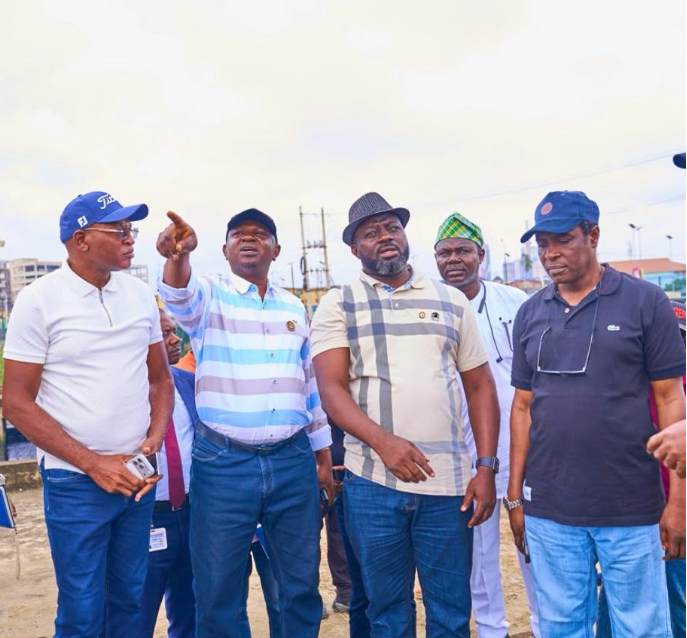
LAGOS, Nigeria — August 8, 2026 — Nigeria’s federal government and Lagos State authorities are working together on a coordinated strategy aimed at reducing the threat of flooding in the country’s largest commercial center, as officials seek longer-term solutions to one of the city’s most persistent environmental challenges.
According to information released by Nigeria’s Federal Ministry of Information on August 7, federal and Lagos authorities are developing a joint approach to strengthen flood prevention and improve preparedness for future flooding.
The cooperation comes as Lagos continues to face significant flood risks associated with heavy rainfall, inadequate or overwhelmed drainage systems, rapid urban development and its location along Nigeria’s Atlantic coastline.
Flooding Is More Than an Environmental Problem
For Lagos, flooding is also an economic and infrastructure challenge.
As one of Africa’s largest urban economies and Nigeria’s main commercial hub, Lagos is home to millions of residents and a vast network of businesses, markets, ports, transportation systems and financial institutions.
When major flooding occurs, roads can become impassable, businesses can be forced to close, homes can be damaged and transportation can be disrupted. Flooding can also affect electricity, sanitation and other essential services.
For lower-income communities and residents living in particularly flood-prone areas, the consequences can be especially severe.
The federal-state initiative therefore represents an effort to treat flood management as an issue requiring cooperation across different levels of government rather than relying solely on emergency responses after heavy rainfall.
Drainage and Urban Growth Remain Major Challenges
Lagos has experienced extraordinary population and urban growth over several decades. That expansion has increased pressure on drainage networks and other infrastructure.
As more land is developed and covered by roads, buildings and other hard surfaces, rainwater has fewer places to naturally drain into the ground. Blocked drainage channels and improper waste disposal can further reduce the ability of drainage systems to handle intense rainfall.
Coastal exposure creates another layer of vulnerability.
Lagos contains extensive low-lying areas, meaning authorities must consider not only rainfall and drainage but also coastal conditions and the long-term effects of climate change and rising sea levels.
A comprehensive flood-prevention strategy could therefore require improvements to drainage infrastructure, stronger maintenance programs, better waste management, improved urban planning and greater enforcement of development regulations in vulnerable areas.
Federal-State Cooperation Could Be Critical
The decision by federal and Lagos authorities to coordinate their response is significant because many of the factors contributing to flooding cross administrative and institutional boundaries.
Large infrastructure projects can require federal financing or regulatory involvement, while Lagos State and local authorities have responsibility for many roads, drainage systems, communities and development activities.
Closer coordination could make it easier to identify high-risk locations, prioritize infrastructure projects and establish clearer responsibilities before emergencies occur.
The effectiveness of the initiative, however, will ultimately depend on implementation.
Residents and businesses will be watching for details about which projects will be prioritized, how they will be funded, when construction or improvements will begin, and how authorities will measure whether flood risks are actually declining.
Protecting Nigeria’s Economic Engine
Flood prevention in Lagos has implications far beyond the city itself.
Lagos plays a central role in Nigeria’s banking, trade, manufacturing, technology, entertainment and transportation sectors. Disruptions in the city can therefore have economic consequences nationally and, in some cases, across West Africa.
A successful federal-state flood strategy could help protect homes and businesses while making Lagos more resilient as its population and economy continue to grow.
The announcement signals recognition that repeated flooding cannot be addressed only when the rains arrive. Long-term planning, infrastructure investment and cooperation between different levels of government will be necessary if Lagos is to reduce the economic and human costs of future floods.