
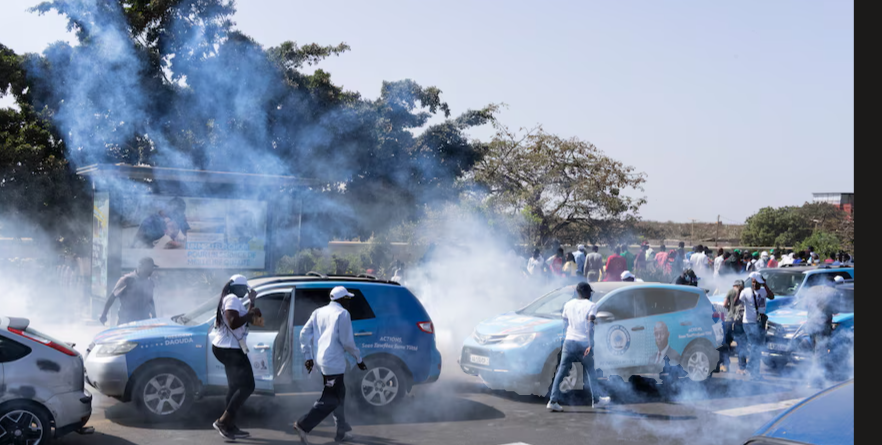
DAKAR, Senegal — Senegalese police fired tear gas to disperse demonstrators gathered outside the National Assembly on Tuesday as lawmakers debated a series of constitutional reforms that have sparked fierce political divisions across the country.
The protests erupted as members of parliament considered proposed amendments to the constitution that opponents argue would significantly weaken the powers of the presidency while transferring greater authority to the National Assembly.
Police moved to break up crowds after demonstrators attempted to gather near the parliamentary complex, deploying tear gas to disperse protesters and restore order. The full extent of any injuries or arrests was not immediately clear.
The constitutional reform package has become one of the most closely watched political developments in Senegal, drawing sharp reactions from political parties, civil society organizations, and legal experts.
Supporters of the reforms argue that redistributing executive authority would strengthen democratic governance by increasing parliamentary oversight, improving institutional checks and balances, and reducing the concentration of power in the presidency. They contend that the changes would make government more accountable and reinforce democratic institutions.
Critics, however, warn that the proposed amendments could create political instability by weakening the executive branch at a time when Senegal faces significant economic and security challenges. Opposition figures have also raised concerns about the speed of the legislative process, calling for broader public consultation before any constitutional changes are adopted.
The demonstrations outside parliament reflected the growing political tension surrounding the debate, with protesters voicing concerns over the potential long-term impact of the reforms on the country’s system of government.
Despite the unrest outside the National Assembly, lawmakers continued deliberations on the proposed constitutional amendments inside the chamber under heightened security.
Senegal has long been regarded as one of West Africa’s most stable democracies, with a history of peaceful transfers of power and relatively strong democratic institutions. However, constitutional reforms have frequently generated intense public debate because of their potential to reshape the balance of power between the executive and legislative branches of government.
Political observers say the outcome of the parliamentary debate could have significant implications for Senegal’s constitutional framework and future governance. The reforms are expected to influence not only the relationship between the presidency and parliament but also the broader functioning of democratic institutions in the country.
As debate continues, authorities have appealed for calm, while opposition groups have vowed to continue peaceful demonstrations against the proposed constitutional changes. The situation remains fluid as lawmakers weigh the reforms amid heightened political tensions and increased security around government institutions.