
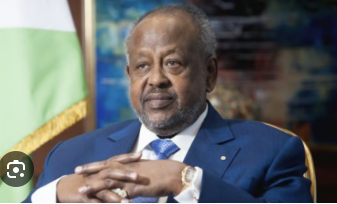
Ismaïl Omar Guelleh has been re-elected for a sixth presidential term after official results confirmed he secured 97.81% of the vote in Friday’s election, extending his more than 25-year hold on power in Djibouti.
The outcome reinforces Guelleh’s position as one of Africa’s longest-serving leaders. Now 78, he has governed the strategically important Horn of Africa nation since 1999, overseeing its development into a key logistical and military hub, located along critical global shipping routes near the Bab el-Mandeb Strait.
Historical context of Guelleh’s rule
Guelleh’s presidency is closely tied to Djibouti’s post-independence political structure, which a single ruling coalition has dominated since the 1990s. He succeeded his uncle, Hassan Gouled Aptidon, the country’s first president, after serving as a senior security and administrative official within the government.
Over successive elections, Guelleh has maintained strong institutional control through the ruling party and allied political structures, while also benefiting from Djibouti’s geopolitical importance, which has attracted sustained foreign military and economic partnerships.
Opposition landscape in the election
This election featured limited competition, with opposition participation historically weakened by fragmentation, restrictions on political organization, and periodic boycotts. Opposition figures in recent cycles have generally struggled to mount unified campaigns capable of challenging the ruling coalition’s dominance.
In this latest vote, opposition parties again contested under constrained conditions, with critics arguing that the electoral environment offers limited space for genuine political alternation. Supporters of the government, however, maintain that the electoral process reflects national stability and continuity in leadership.
Broader implications
Guelleh’s renewed mandate underscores the persistence of entrenched incumbency in Djibouti’s political system. While the government continues to emphasize stability and development, the overwhelming margin of victory is likely to renew debate among analysts and opposition groups regarding political pluralism and electoral competitiveness in the country.
The result consolidates continuity at a time when Djibouti remains a focal point of international strategic interest and regional security dynamics in the Horn of Africa.