
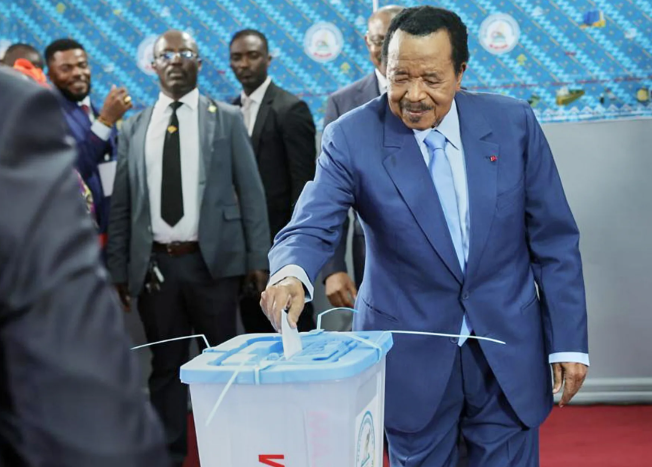
Cameroon stands at a precarious political crossroads. The recent reintroduction of a vice presidency—approved under the authority of long-serving leader Paul Biya—has intensified national debate about succession, legitimacy, and the future of governance. While reports that his son, Franck Emmanuel Biya, has already assumed the role remain unverified, the mere possibility is enough to deepen unease across an already volatile political landscape.
At issue is not simply who occupies a newly revived office. It is what such an appointment would represent in a country already grappling with a disputed election, civil unrest, and long-standing accusations of authoritarian rule.
A Fragile Political Climate
Following the contested 2025 presidential election, Cameroon has experienced protests, arrests, and periodic violence. Opposition figures have challenged the legitimacy of the electoral outcome, while civil society groups have pointed to systemic governance failures. In this context, any move perceived as consolidating power within a single family risks being interpreted not as stabilization, but as provocation.
The reintroduction of the vice presidency, a position abolished decades ago, is itself controversial. It allows the president to appoint a successor without electoral input, effectively centralizing control over political continuity. If that authority is used to elevate a family member, the implications become far more severe.
The Dangers of Dynastic Politics
Appointing Franck Biya would signal a shift toward dynastic governance—something many African nations have struggled to avoid in the post-independence era. Cameroon, already under the leadership of one man since 1982, would risk reinforcing the perception that political power is not earned through democratic processes but inherited through familial ties.
Such a move would likely:
- Undermine democratic legitimacy: Citizens who already question electoral integrity may view the appointment as confirmation that leadership transitions are predetermined rather than participatory.
- Inflame public anger: In a climate of economic strain and political frustration, the optics of dynastic succession could trigger renewed protests or even escalate unrest.
- Alienate younger generations: Cameroon’s youth, many of whom feel excluded from political decision-making, may see this as further evidence that the system is closed to them.
- Damage international credibility: Western partners and regional institutions may interpret the move as a step away from democratic norms, potentially affecting diplomatic and economic relationships.
Military Implications and Security Risks
Even more concerning are unverified claims that Franck Biya could assume influence over the military. In a country already facing internal security challenges—including separatist conflict in its Anglophone regions—placing military authority in the hands of an unelected and politically untested figure could destabilize command structures.
The armed forces must remain a national institution, not a tool of familial consolidation. Any perception that loyalty to leadership is based on personal allegiance rather than constitutional order risks fracturing cohesion within the ranks.
A Moment That Demands Restraint
Supporters of the constitutional change argue that the vice presidency ensures continuity, particularly given the president’s age. That concern is not without merit. However, continuity achieved through perceived favoritism is unlikely to produce stability. Instead, it may accelerate the very instability it seeks to prevent.
Cameroon’s priority should be restoring public trust—through transparent governance, credible elections, and inclusive political dialogue. Elevating Franck Biya, if it occurs, would move the country in the opposite direction.
Conclusion
Cameroon’s future hinges not only on who leads, but on how leadership is determined. The introduction of a vice presidency could have been an opportunity to strengthen institutional resilience. Instead, if used to facilitate dynastic succession, it risks becoming a catalyst for deeper division.
In a nation already on edge, such a decision would not merely be controversial—it could prove to be a profound and lasting mistake.